Pet Owner Tips to Prevent Septic System Problems
Pets are part of the family, but some everyday pet-care habits can create problems for your plumbing and septic system. From cat litter and pet hair to food scraps and so-called flushable products, seemingly harmless items can contribute to clogs, buildup, and unnecessary strain on your system.
Knowing what belongs in the trash and what can safely go down the drain is an important part of septic maintenance. If you have dogs, cats, or other pets at home, keep these tips in mind to help prevent avoidable septic problems.
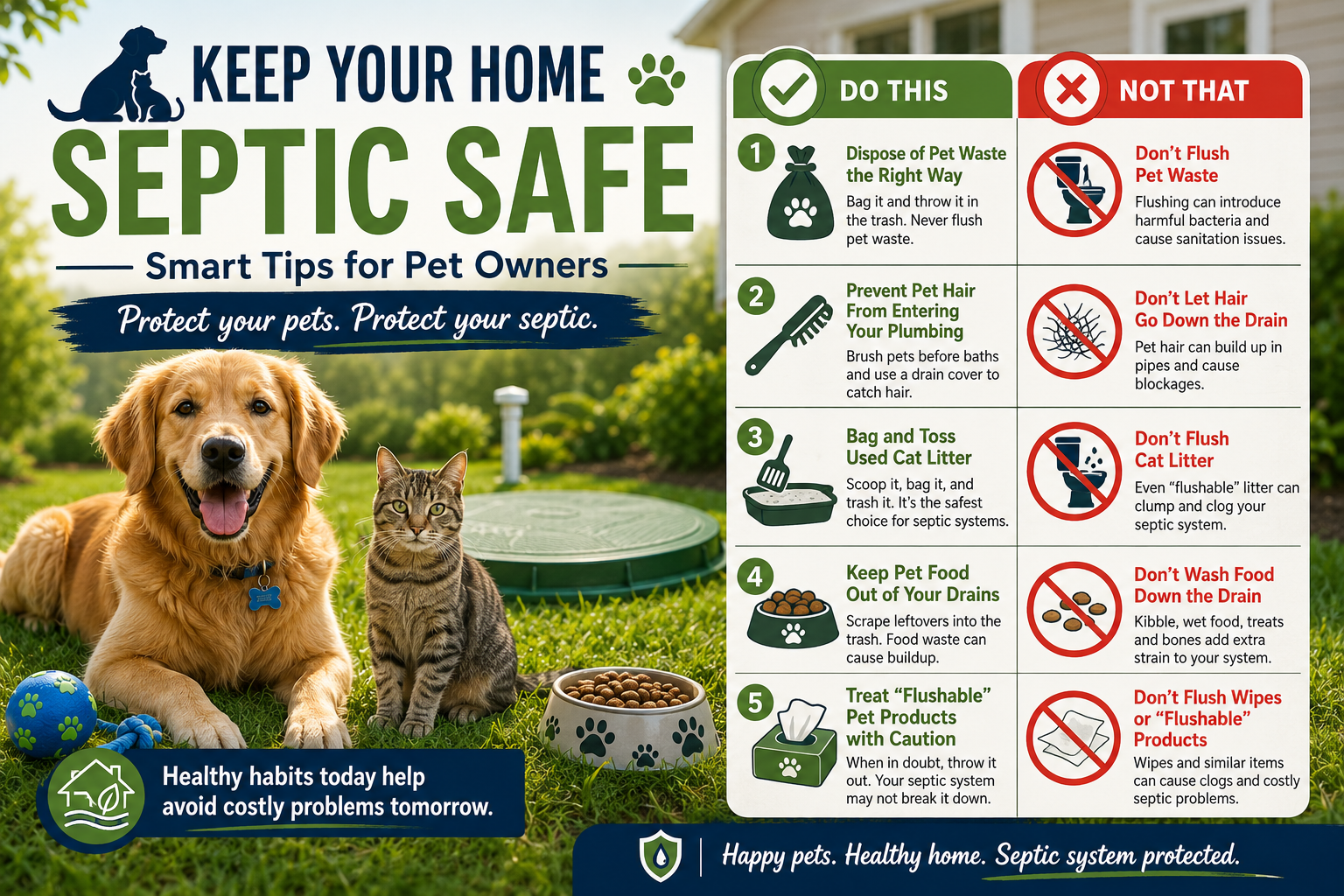
1. Dispose of Pet Waste the Right Way
Flushing pet waste may seem like an easy way to dispose of it, but it can introduce materials into your septic system that were never meant to be there. Dog waste, in particular, can contain parasites and other organisms that create sanitation concerns.
Instead of flushing pet waste, place it in a sealed bag and dispose of it with your household trash according to local disposal guidelines. Keeping animal waste out of your plumbing is a simple way to reduce septic system problems.
2. Prevent Pet Hair From Entering Your Plumbing
Bathing your dog or washing other pets can send a surprising amount of hair into the plumbing. Like human hair, pet hair can collect inside drainpipes and combine with soap residue and other debris to create blockages.
Before bathing your pet, remove as much loose hair as possible by brushing them outside or in an area where the hair can be collected. You can also use a drain cover designed to catch hair before it enters the plumbing. Empty the collected hair into the trash rather than rinsing it down the drain.
3. Bag and Toss Used Cat Litter
Even when cat litter is labeled biodegradable or marketed as flushable, it can still create problems for septic systems. Litter is designed to absorb moisture and form clumps, which can make it difficult to move through plumbing and break down in a septic tank.
The safest approach is to scoop used litter into a secure bag, tie it, and place it in the trash. Avoid putting litter down toilets, sinks, or other drains, regardless of what the packaging claims about its ability to be flushed.
4. Keep Pet Food Out of Your Drains
Accidentally dropping a few pieces of pet food down the sink may not seem like a big deal, but food waste can contribute to plumbing buildup and add unnecessary organic material to your septic system.
This is especially important with dry kibble, which can absorb water and expand. Instead of washing leftover food down the sink or using the garbage disposal to dispose of large amounts of kibble, scrape it into the trash.
The same rule applies to wet pet food, treats, bones, and other leftover animal food. If your pet doesn’t eat it, dispose of it in the trash rather than sending it through the plumbing.
5. Treat “Flushable” Pet Products with Caution
Pet wipes, cleaning wipes, and other products marketed as flushable can be tempting to dispose of in the toilet. However, being labeled flushable does not necessarily mean a product is appropriate for every septic system.
Many wipes do not break down as readily as toilet paper and can contribute to blockages as they move through plumbing. When you have a septic system, it’s better to dispose of wipes, cleaning materials, and similar products in the trash.
When in doubt, keep solid waste and non-toilet-paper products out of the toilet.
Simple Habits Can Help Prevent Septic System Problems
Pet ownership doesn’t have to put additional strain on your septic system. A few simple disposal habits can help keep pet-related waste, hair, food, and litter out of your plumbing in the first place.
More importantly, good disposal habits should be paired with regular septic maintenance. Even when you are careful about what goes down your drains, solids naturally accumulate inside the tank over time. Routine pumping and inspections give homeowners an opportunity to remove buildup and identify potential problems before they become larger issues.
If you have pets and want to keep your septic system operating properly, Local Septic can help. Our team provides professional septic pumping, repairs, and maintenance for homeowners. Contact Local Septic today to schedule service and keep your septic system ready for whatever your household and pets send its way.